

Gender Disparities of the Tea Communities in Assam
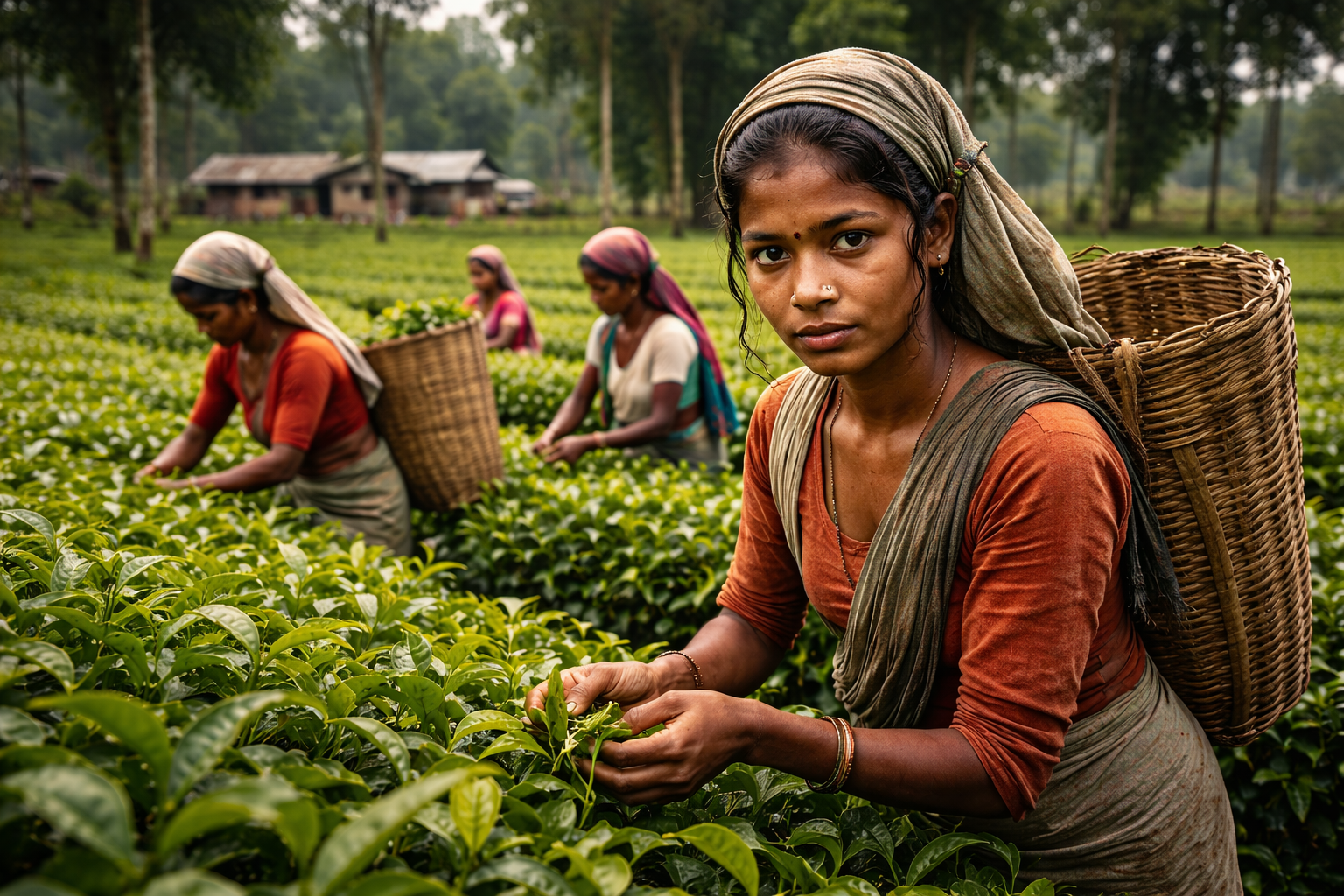
Gender inequality is considered a significant issue in India, as the nation ranks 123 out of 189 countries in the United Nations Gender Inequality Index, indicating that major work needs to be done to reduce the gender gap across the country (ETP, 2022). Assam, a state in northeast India, has a growing population of nearly 31 million. More than half of India’s tea is produced in Assam, and the state alone is responsible for one-seventh of global tea production. The tea plantation sector employs around one million women in Assam across more than 800 tea estates (ETP, 2022). Under the regulatory framework of the Plantation Labour Act, a large number of facilities are meant to be provided to families residing and working in tea gardens, including housing, education, and maternal benefits. However, the educational status of women in Assam continues to lag behind other Indian states. Less than a third (29.6%) of women have completed ten or more years of schooling, while female enrolment in primary and secondary education stands at 50% and 45% respectively. Literacy among women in Assam is 75%, compared to 82% among men. Literacy rates on tea estates are even lower, and on some estates, only 22% of female workers are literate (ETP, 2022).
While many tea estates provide primary education on-site, access to secondary education remains limited due to distance and poor transportation facilities. Although the tea estate sector offers significant employment opportunities for women, most are engaged as temporary labourers, making them ineligible for broader welfare schemes under the Plantation Labour Act. The tea plantation sector in Assam operates on a deeply gendered division of labour. Tasks such as tea plucking are feminised, devalued, and framed as low-skilled. This gendered narrative legitimises wage disparities and reinforces women’s marginalisation within workplace hierarchies.
Despite constituting the majority of the workforce, women rarely occupy supervisory or managerial roles and often receive lower wages than male counterparts for similar work (Hazarika, 2025). These practices reproduce structural inequalities entrenched in contemporary labour relations.
Although India has well-established legal frameworks such as the Plantation Labour Act (1951) and the Minimum Wage Act (1948), their implementation within Assam’s tea industry remains grossly inadequate (Hazarika, 2025). Wage discrimination persists both overtly and covertly, shaped by unequal power relations between management and workers. Women who experience sexual abuse within tea gardens often lack access to effective redressal mechanisms due to male dominance in decision-making roles. Nearly 50% of tea garden households rely on below-poverty-line ration cards, while up to 95% of profits are captured by brands and supermarkets. The colonial model of extraction laid the foundation for present-day marginalisation, leaving women workers at the periphery of economic gains and institutional recognition (Hazarika, 2025).
Women plantation workers typically engage in 12–13 hours of strenuous labour daily, including plucking and carrying tea leaves. Working conditions worsen during the monsoon season, with prolonged exposure to water leading to skin diseases and infections.
Sexual Harassment of Women in the Tea Gardens of Assam
Despite persistent wage discrimination rooted in unequal power structures, grievances of women workers are rarely prioritised by unions or line supervisors. This silence perpetuates intergenerational cycles of oppression. Gender-based violence within tea garden communities manifests through child marriage, trafficking, and high maternal mortality rates. Assam records one of the highest maternal mortality rates in India, linked to anaemia, malnutrition, poor healthcare access, and entrenched gender inequalities. Although women dominate job categories such as plucking, pruning, and hoeing, they remain excluded from negotiation and decision-making spaces within workers’ unions. A qualitative study of five women tea plantation workers in the Barapani tea estate documented multiple forms of workplace sexual harassment, reflecting systemic vulnerabilities.
Non-verbal forms of sexual harassment: These include stalking, lewd comments, suggestive songs, and indirect requests for sexual favours.
Physical forms of sexual harassment: These involve unwanted physical proximity and touch. Under the pretext of assistance, helpers often exploit their position to engage in inappropriate contact, sometimes accompanied by intimidation and bullying.
Quid Pro Quo harassment: This involves implicit demands for sexual favours in exchange for better wages or job security. Although none of the interviewed women accepted such demands, they reported extreme fear of job loss, social stigmatisation, and retaliation if they resisted (MFF–NAPSWI, n.d.).
Tea Tribes of Assam: The Prospects of Marginalisation
The tea tribes of Assam comprise nearly 2 million people, accounting for about 20% of the state’s population. Despite their central contribution to India’s economy, the tea plantation community remains one of Assam’s poorest and most marginalised groups (Kansal, 2025). Confined to remote tea estates in districts such as Lakhimpur, these communities endure substandard living conditions, limited healthcare, and poor access to education. The average life expectancy among tea workers is approximately 50 years, nearly 18 years below the national average. Malnutrition, alcoholism, occupational diseases, and generational poverty are widespread, perpetuating long-term marginalisation. Cultural and linguistic barriers further restrict their ability to claim rights and integrate with broader Assamese society. Although government initiatives exist to improve health, education, employment reservations, and maternal benefits, implementation gaps and structural inequalities continue to undermine their effectiveness. Only holistic strategies addressing economic, social, educational, and cultural inequalities can meaningfully uplift tea tribe communities and integrate their experiences into Assam’s mainstream development discourse.
Conclusion
This study highlights the deeply entrenched intersection of class and gender disparities within Assam’s tea plantation sector. Despite protective provisions under the Plantation Labour Act, failures in implementation, combined with patriarchal power structures, have resulted in wage disparities, inadequate education, and widespread sexual harassment.
Addressing these complex challenges requires intersectional and sustained policy interventions targeting economic, social, educational, and cultural dimensions. Only through comprehensive reforms can the structural inequities facing tea garden communities be dismantled and their integration into Assam’s development trajectory ensured.
References
Hazarika, D. (2025). Ejsss.net.in. https://www.ejsss.net.in/print_article.php?did=15968
Sexual Harassment of Women Tea Garden Workers: Case Study in Barpani Tea Estate, Assam – MFF-NAPSWI Scholarships. (n.d.). Retrieved November 27, 2025, from https://www.marthafarrellfoundation.org/uploads/pdf_files/1606135528_Sexual%20Harassment%20of%20Women%20Tea%20Garden%20Workers_%20Case%20Study.pdf
Kansal, A. (2025, March 26). The Tea Tribes of Assam: From Marginalization to Inclusion. BlueKraft. https://www.bluekraft.in/the-tea-tribes-of-assam-from-marginalization-to-inclusion/
Deshmukh, C. S. L. (2025, January 22). A Bitter Harvest: Poverty and Promise in Assam’s Tea Gardens. The Perfect Voice. https://www.theperfectvoice.in/post/a-bitter-harvest-poverty-and-promise-in-assam-s-tea-gardens
Arnab’s core research interests lie in political engagement, digital activism, youth participation, and contemporary international relations, reflecting his commitment to understanding the evolving dynamics of politics both in India and globally..
A chronic topic,may be not burning .Has been depicted elaborately about the deplorable condition of female workers and absence of gender parity .The scholar has highlighted the crucial points,which needs immediate attention from the policy makers and true implementation.Excellent insights.