Special Report
Disclaimer: This report does not assert legal guilt beyond what courts or independent inquiries have found; instead it aims to collect historical claims, reports, and scholarly critiques about the role of RSS in communalism (pre- and post-independence), BJP/RSS linkages, and Narendra Modi’s record, especially with regard to minorities. Some sources are contested; I note when findings are legally upheld vs. when allegations remain under dispute.
Introduction
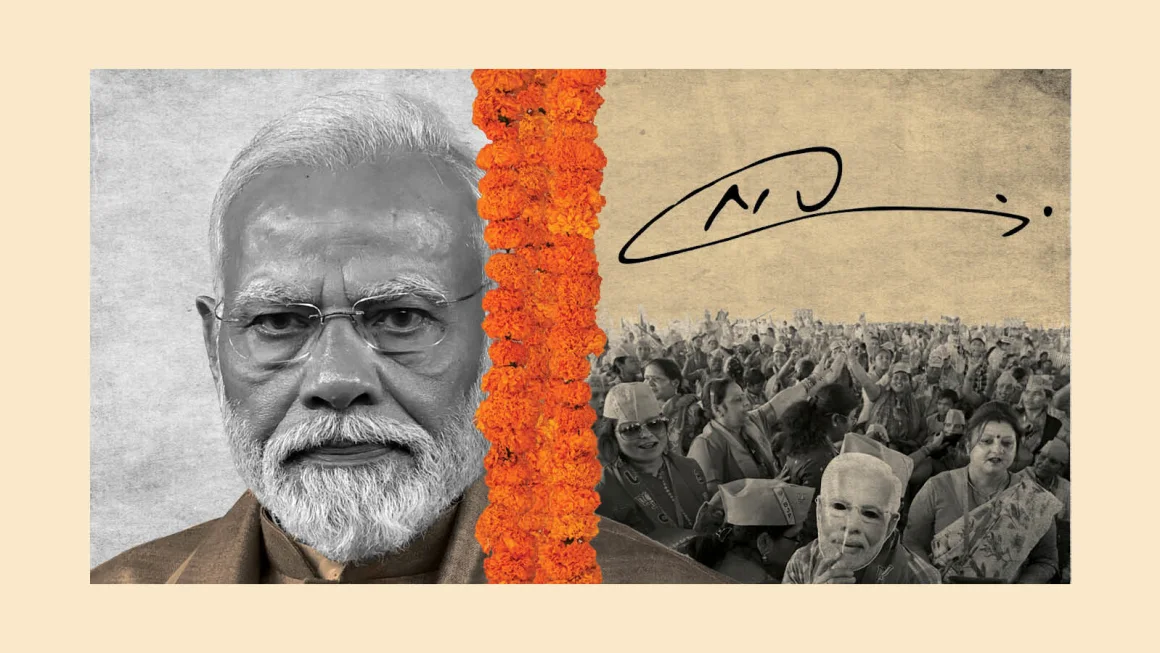
This morning, while reading two of India’s most widely circulated newspapers, The Indian Express and Hindustan Times, I was struck by a remarkable coincidence. Both papers carried opinion columns written by Prime Minister Narendra Modi himself, where he sang the praises of Mohan Bhagwat’s leadership of the RSS, discussed Vasudhaiva Kutumbakam, and reflected on the significance of 11 September in the context of Swami Vivekananda’s Chicago address and the 9/11 terrorist attacks. His articles, titled “A Living Example of Vasudhaiva Kutumbakam” and “Leader Who Presided Over the Rise of RSS,” paint a glowing portrait of Bhagwat, describing him as a transformative leader who has shaped the Sangh into an organisation committed to harmony, inclusivity, and nation-building.
This moment of public praise for Mohan Bhagwat and the approaching centenary of the RSS provides a timely backdrop to reconsider the historical and contemporary role of the RSS, particularly in relation to India’s communal politics, the treatment of minorities, and the political career of Narendra Modi.
In this special report, I trace the evolution of the RSS from its pre-1947 period to post-independence India, critically examine its involvement in communal politics, and analyse how its ideological and organizational links with Modi and the BJP have affected national discourse, minority rights, and state responses to communal violence. I explore scholarly debates, legal findings, and historical sources to present a comprehensive account, while acknowledging competing viewpoints and legal dimensions. The report concludes with reflections on accountability, justice, and the challenges of dealing with religious nationalism in a plural society.
RSS and Nation Building: Pre-Independence Phase
1.1 Founding and Ideological Foundations
The Rashtriya Swayamsevak Sangh (RSS) was established in 1925 in Nagpur by Dr. Keshav Baliram Hedgewar. Its stated objective was to foster national renewal through disciplined social mobilisation, cultural revival, and Hindu unity. Over time, writings by Hedgewar and his successor M. S. Golwalkar articulated a vision grounded in Hindutva—understood as Hindu cultural and civilizational identity—rather than merely a religious doctrine. This vision contrasted with the secular and pluralist nationalism of the Indian National Congress. Scholars such as Christophe Jaffrelot, in The Hindu Nationalist Movement in India: Politics and Ideology, have traced how the RSS and other Hindutva organisations sought to revive Hindu society and culture as the foundation of a regenerated India, often critiquing Congress’ secular consensus.
While Hedgewar initially avoided direct political confrontation with the British, and RSS maintained an ambiguous stance toward Congress-led independence movements, the ideological positioning of the RSS increasingly distinguished it from mainstream anti-colonial currents. Hedgewar reportedly participated personally in Satyagraha, but he chose not to mobilise the RSS organisation for it, and he steered clear of mass political campaigns that the Congress was leading.
1.2 RSS and British Rule: Opposition, Cooperation, or Neutrality?
RSS’s relationship with British colonial authorities and the broader independence struggle was complex and often contradictory. Hedgewar’s strategy was to keep RSS as a socio-cultural movement, which, in his view, preserved Hindu society’s strength rather than being co-opted into the political strategies of the Indian National Congress. As a result, RSS generally refrained from participating in large-scale anti-colonial campaigns, such as Quit India in 1942, in an organised way—though individual members might have participated.
This choice, whether prudent or opportunistic, was seen by critics as avoidance or tacit cooperation with colonial structures. Some historians argue that by not opposing the British actively, RSS allowed its ideological agenda to grow relatively unchallenged and built a base that would later become politically powerful. Transforming India by Sumantra Bose and other writings explore how Hindutva-based organizations were able to operate during the colonial period, often capitalising on fears of Muslim political mobilisation or missionary expansion.
1.3 RSS and Communalism: Role in Partition, Relief Work, and Political Posture
The RSS has been both criticised for fuelling communalism and acknowledged for relief work during partition. During the Partition of India in 1947 and subsequent communal violence, the RSS participated in relief and refugee work, particularly assisting Hindu and Sikh refugees migrating from what became Pakistan. In many places, RSS activists helped organise refugee camps, transportation, and rehabilitation efforts.
At the same time, critics argue that RSS ideology contributed to a hardened Hindu identity and reinforced communal divisions. The idea that Hindus needed to organise defensively—or even offensively, against perceived Muslim political power was central to Hindutva thinking. Scholars like Bhagwan Josh (in “Partition and the Rise of Hindutva Movement in Contemporary India”) have emphasised how Hindutva discourses shaped and were shaped by the two-nation theory and communal violence leading up to Partition.
While direct evidence that RSS “facilitated Partition” remains contested, there is little doubt that its ideological stance influenced communal thinking in certain regions and encouraged hardened communal positions. The complex question is whether RSS actively pushed for Partition or passively accepted it as the outcome of communal conflict. Some RSS defenders argue that the organisation was critical of the Muslim League’s demand for Pakistan, and that RSS leaders lamented Partition as a tragic division of the subcontinent. The Security and Rights Implications of Hindu Nationalism in India by S. Narula, notes that RSS opposed what it considered Congress’s “appeasement of Muslims” but was also sceptical of the Muslim League’s political project.
In sum, the pre-independence period for the RSS was characterised by a dual role, on one side, as a social movement committed to Hindu identity, discipline, and revival; on the other, as a potential contributor to communal polarization through its ideological framing and organisational choices.
Post-Independence India: The Ban, Sardar Patel, and RSS’s Reinvention
2.1 The 1948 Ban Following Gandhiji’s Assassination
The assassination of Mahatma Gandhi on 30 January 1948 by Nathuram Godse, who once had links to Hindu nationalist circles, triggered a massive backlash. The government of India, led by Home Minister Sardar Vallabhbhai Patel, swiftly blamed extremist Hindu nationalist ideologies for creating an environment conducive to violence. On 4 February 1948, the government imposed a ban on the RSS, describing it as an organization promoting forces of hate and violence that endanger India’s national freedom and reputation. Patel’s official communique explicitly cited “communal poison” in the public speeches of RSS activists and held that this poison contributed to the tragedy of Gandhi’s assassination.
In that same notice, Patel wrote:
“All their speeches were full of communal poison … As a final result of the poison, the country had to suffer the sacrifice of the invaluable life of Gandhiji.”
The ban covered RSS activities in the Chief Commissioner’s Provinces and Governor’s Provinces, and many RSS members, including M. S. Golwalkar were arrested.
2.2 Negotiations, RSS Response, and Lifting of the Ban
Following the ban, Golwalkar and other RSS leaders negotiated with the government. A primary demand from Patel was that the RSS adopt a written constitution, accept India’s national flag and Constitution explicitly, and refrain from political activity or violence.
Golwalkar initially resisted, and the RSS launched a satyagraha in December 1948, during which thousands of swayamsevaks were arrested. Eventually, an RSS constitution was drafted, including pledges of loyalty to the Indian state, non-violence, non-politicization, and acceptance of the national flag. After assurances, the ban was lifted on 11 July 1949.
In his letter to Golwalkar on 11 September 1948, Patel wrote:
“There can be no doubt that the RSS did service to Hindu society … But the objectionable part arose when they, burning with revenge, began attacking Mussalmans. Organising the Hindus and helping them is one thing but going in for revenge for its sufferings on innocent and helpless men, women and children is quite another thing.”
This illustrates Patel’s position: while acknowledging RSS’s organisational capacity and “service” for Hindus, he sharply criticised episodes where the organisation or its members either encouraged or condoned retaliatory violence or communal vengeance. He also warned against RSS’s covert organisational style and what he perceived as its potential to become a private militia.
Thus, while the RSS survived as an organisation, it was compelled to undergo ideological reinvention and to publicly pledge loyalty to India and its democratic structures, a transformation that shaped its post-independence trajectory.
2.3 RSS’s Early Activities After 1949: Reconstruction, Refugee Work and Political Positioning
In the decades that followed, the RSS and its associated Sangh Parivar organisations played roles in refugee relief, social work, disaster relief, and community mobilisation, especially during Partition and in border areas. Eknath Ranade, a key RSS figure, played a major role in setting up refugee aid committees in East and Northeast India, helping displaced persons. Such work allowed RSS to re-establish its public image as a social service organisation and regain influence.
Nevertheless, the tension between being a service-oriented movement and maintaining a punitive, exclusionary Hindutva ideology persisted. As RSS regained organizational footing, it also launched political initiatives. Members of RSS played leading roles in establishing the Bhartiya Jana Sangh (Jan Sangh) in 1951, which later evolved into the Bhartiya Janata Party (BJP). The Jan Sangh explicitly drew from RSS ideology, and its leaders, such as Syama Prasad Mookerjee and later senior BJP politicians—were heavily influenced by Hindutva thinking. Critics contend that these developments marked the movement’s shift from purely social-cultural engagement to overt political contestation.
Hence, even though RSS survived the ban and continued to function, its post-independence phase was characterized by a dual strategy: rebuilding legitimacy through social service, and reasserting ideological influence by creating political platforms rooted in Hindutva.
RSS, the Sangh Parivar, and Communal Politics in Independent India
3.1 The Rise of the Sangh Parivar and Political Mobilisation
The RSS gradually consolidated a network of affiliated organisations under the broader umbrella of the Sangh Parivar. These included the Bhartiya Jana Sangh (which later became BJP), Vishwa Hindu Parishad (VHP), Bajrang Dal, Seva Bharati, Vidya Bharati, and other educational, cultural, and social organisations. Each of these played distinct yet interconnected roles in promoting Hindu cultural identity, social service, and political mobilisation.
Scholars have noted that through shakhas (local branches or daily meetings), RSS built grassroots networks that connected volunteer mobilisation with political activism. Thomas Blom Hansen, in The Saffron Wave: Democracy and Hindu Nationalism in Modern India, argues that these networks played a crucial role in popularising Hindu nationalism and mobilizing youth—first socially and later politically, culminating in electoral victories.
3.2 Babri Masjid and Ayodhya Movement
One of the most visible and contentious episodes in India’s post-independence communal history has been the Ayodhya conflict over the Babri Masjid. On 6 December 1992, activists associated with the VHP, Bajrang Dal, and other Hindutva organisations demolished the 16th-century Babri Masjid in Ayodhya, claiming that the mosque had been built over a temple dedicated to Lord Ram. The event triggered nationwide communal riots, with large-scale violence between Hindus and Muslims.
The Liberhan Commission, established in 1992, submitted its report in 2009. The Commission found that the demolition was not a spontaneous act, but rather premeditated and coordinated. It named several leaders linked to the BJP, VHP, and RSS for failing to control the mob and for encouraging the agitation, though the report did not conclusively assign criminal conspiracy to all individuals named. Critics of the RSS and BJP have cited this report as strong evidence of organised communal mobilisation and political culpability.
However, the legal and criminal trajectories have been more complex. In 2020, a special court acquitted 32 individuals, including senior BJP and RSS-linked leaders, of criminal conspiracy charges in connection with the demolition, citing insufficient evidence. This divergence between the Commission’s findings and the court’s judgment underscores the contested nature of criminal accountability in communal politics.
3.3 Gujarat 2002: Communal Violence and Governance Failures
The Gujarat riots of 2002 remain a watershed moment in India’s communal trajectory and in Narendra Modi’s political career. After the burning of the Sabarmati Express train at Godhra on 27 February 2002, large-scale anti-Muslim violence broke out across Gujarat, resulting in the deaths of over a thousand people (many estimates put the death toll higher), widespread displacement, loss of property, and allegations of sexual violence. Human rights organisations and media investigations have highlighted failures of law enforcement, delayed or inadequate government response, and complicity on the part of local officials.
One of the most notorious incidents was the Naroda Patiya massacre, where dozens of Muslims were killed in front of police, and paramilitary forces allegedly did not intervene promptly. Babu Bajrangi, a leader from the Bajrang Dal (a Sangh Parivar affiliate), was convicted and sentenced to life imprisonment for orchestrating part of the violence.
The Bilkis Bano case involved the gang rape of Bilkis Bano and murder of her family members in Gujarat during the riots. The case eventually reached the Supreme Court, which ordered the Gujarat government to provide compensation to the victim, a government job, and safe housing. The Supreme Court also ordered the central government to monitor the release of those convicted. The Supreme Court’s handling of the case underscored the systemic failures in prosecuting communal violence, and the challenges faced by minority victims seeking justice.
Yet, in terms of assigning legal responsibility to Chief Minister Narendra Modi at the time, multiple investigations, including a Special Investigation Team (SIT) and judicial reviews, have not found sufficient evidence to prosecute him criminally for orchestrating or facilitating the violence. This has been a subject of heated debate among civil society groups, human rights advocates, and scholars, some of whom argue that the legal process was inadequate, while defenders of Modi assert that court findings vindicate him.
3.4 BJP Rule and RSS Influence Since 2014: Majoritarian Policies, Identity Politics, and Minority Concerns
Under Narendra Modi’s leadership, first as Chief Minister of Gujarat and later as Prime Minister from 2014, the ideological influence of the Sangh Parivar on national policy and identity debates has increased significantly. Critics argue that the BJP’s governance and legislative agenda reflect a majoritarian vision of India, with religious identity playing a more prominent role in public life, civic institutions, and law enforcement. Scholars such as Christophe Jaffrelot (in Modi’s India: Hindu Nationalism and the Rise of Ethnic Democracy) have argued that this has contributed to political polarization and a shrinking space for minority voices. Partition and Hindutva scholarship and journalistic critiques emphasize how issues such as the Citizenship Amendment Act (CAA), the National Register of Citizens (NRC), cow protection laws, anti-conversion legislation, and vigilante violence related to “love jihad” have heightened anxieties among India’s Muslim population.
It is important to note, however, that attributing direct responsibility for these policies or for specific acts of communal violence to the RSS or to Modi personally is contested. Government and ruling party supporters often argue that these are matters of law and order, issues of national integration, or attempts to enforce existing legal norms, and that governance failures or isolated violence are not direct consequences of ideological leadership. The legal and administrative record is mixed, and in many cases judicial review or accountability remains partial.
Narendra Modi’s Association with RSS: Ideology, Career, and Controversy
4.1 The Pracharak Tradition and Modi’s Early Years
Narendra Modi’s own political trajectory is deeply intertwined with the RSS. He spent significant portions of his early political life as an RSS pracharak (full-time worker or organiser). The pracharak tradition within RSS involves voluntary dedication to the movement, leaving one’s home and family, and engaging in grassroots social work, ideological training, and cadre-building. In the writings highlighted by Modi in his own opinion piece, he emphasised the significance of pracharaks and how such individuals commit to “India First” and social transformation.
Modi’s own experiences in Gujarat, including rural work and youth mobilisation, reflect the pracharak template. In his Indian Express piece, Modi praised Mohan Bhagwat’s early years as a pracharak in Maharashtra and Vidarbha, suggesting that those grassroots postings shaped Bhagwat’s perspective on the challenges faced by the poor and downtrodden. Modi’s narrative suggests that pracharak work is central to understanding RSS’s mission and its orientation toward nation building. He wrote that Bhagwat’s work in backward parts of Maharashtra and Bihar shaped his view of grassroots challenges and influenced his leadership style.
At the same time, scholars argue that the pracharak model allowed the RSS to build disciplined cadres committed to ideological transformation of society, and eventually to political mobilization. The pracharak tradition has been credited with helping RSS expand its organisational reach, especially among youth, and with providing personnel for Sangh-affiliated organisations and political parties.
4.2 Modi and Gujarat: Governance, Communal Conflict, and Accountability
In Gujarat, Modi rose to political prominence as Chief Minister in 2001. His tenure coincided with the 2002 riots, which led to persistent allegations that his administration failed to protect Muslims or prevent violence. As discussed earlier, reports from human rights organisations, media investigations, and legal cases revealed serious lapses. Critics charge that Modi’s government either tolerated or was complicit in violence, while defenders cite legal findings and the lack of criminal convictions against Modi as evidence of his innocence. The Human Rights Watch 2012 report India: A Decade On – Gujarat Justice Incomplete contends that justice remained incomplete, citing slow or inadequate prosecutions, especially for state officials, and systemic failures.
Despite these controversies, courts, including India’s Supreme Court and Gujarat-based Special Investigation Teams—and various judicial reviews have not convicted Modi. The Special Investigation Team (SIT) set up by the Supreme Court exonerated him of direct responsibility for the riots, although its findings have been subject to criticism and debate. Critics highlight the difficulty victims faced in obtaining justice, the large number of people still displaced, and the perception that state and local agencies obstructed or delayed accountability.
4.3 Modi, RSS, and Majoritarian Discourse in National Politics
As Prime Minister, Modi has frequently invoked themes associated with Hindutva, such as national regeneration, civilisational revival, and cultural identity. His Indian Express article praising Mohan Bhagwat, and invoking Vasudhaiva Kutumbakam, continues this theme of a civilisational vision of India rooted in Hindu cultural identity, in which the RSS plays a central organisational role. Modi’s framing of Bhagwat as someone who “never compromised on the core ideology” while navigating changing social realities echoes the way many Sangh-affiliated leaders frame the compatibility of Hindu nationalism with modernity. By aligning RSS’s centenary with mass movements such as Swachh Bharat and Beti Bachao Beti Padhao, Modi’s approach attempts to rebrand Sangh Parivar activities under mainstream national development narratives. In doing so, he reframes the RSS from being a fringe ideological organisation to a key contributor to India’s national development and social transformation. This narrative emphasizes humanitarian service, downplaying communal controversies.
Nevertheless, critics argue that such framing can obscure or sanitize histories of communal violence and ideological exclusivism, effectively reshaping public memory in ways that minimize or erase minority experiences of exclusion, violence, and injustice. This selective historical rearticulation, highlighting service and civic values while glossing over conflict—is one of the central critiques leveled at modern Hindutva discourses. Scholarly works such as Hindu Nationalism: From Ethnic Identity to Authoritarianism and articles by analysts like Shamsul Islam warn of the risks of conflating service-oriented Hindu nationalist narratives with inclusive developmental nationalism, especially when minority rights are deprioritized.
Patterns, Implications, and Contestations
5.1 Recurring Patterns: Ideology, Mobilisation, and Violence
Three recurring patterns emerge from the historical and contemporary record:
1. Ideological Primacy of Hindutva: From its inception, the RSS has emphasized Hindu identity, cultural unity, and civilizational revival. Its ideological basis often positions Hindu society as needing regeneration, while viewing other religious communities—especially Muslims—as either opponents or obstacles to national renewal. This framing has facilitated a communal lens in interpreting nationhood and history. The notion of Vasudhaiva Kutumbakam, frequently invoked, is often reinterpreted in ways that emphasize a singular civilizational order rather than pluralistic inclusion.
2. Cadre Building and Grassroots Mobilisation: The RSS’s shakha-based model and pracharak system have allowed it to cultivate disciplined cadres over generations. This grassroots mobilisation has enabled the organisation to influence youth, social networks, and political outcomes, especially as Sangh Parivar organisations have transitioned from cultural activism to electoral politics.
3. Communal Conflict and State Responses: In major instances of communal conflict—such as the Babri Masjid demolition and Gujarat 2002, there is a pattern of mass mobilisation of Hindutva cadres, delayed or failed state response, and long-term struggles for justice by victims. While the RSS and BJP often deny direct organisational responsibility, or remain unconvicted in courts, independent commissions, human rights reports, and civil society documentation have repeatedly highlighted the roles of Hindutva activists and state failures. The difficulty of establishing criminal responsibility, coupled with long delays in prosecution, has contributed to a sense of impunity.
5.2 Contestations and Legal Complexities
Several disputes complicate this narrative:
• Legal vs. Moral Accountability: Many public and scholarly critiques of the RSS and BJP rest on moral or political claims, which do not always translate into successful criminal prosecution. Indian courts have high standards of proof, and in cases such as Babri demolition and Gujarat riots, many accused have been acquitted or not prosecuted. This introduces a tension between public perceptions of culpability and legal outcomes. The exculpation of key figures (or failure to secure convictions) is often cited by Hindutva defenders as vindication, while critics argue that the legal system’s weaknesses (such as witness intimidation, state collusion, or selective prosecution) have hampered justice.
• Distinguishing Central Leadership from Local Actors: Another major point of contention is the extent to which the central leadership of RSS or BJP can be held responsible for local acts of communal violence or vigilante actions. While local agents or fringe militants may commit violence, proving a central directive or conspiracy is difficult. This distinction is central to many legal defenses.
• RSS’s Social Service vs. Ideological Activism: RSS and its supporters emphasise the organisation’s social service work—disaster relief, humanitarian aid, education, healthcare, and rehabilitation of refugees. Critics argue that these activities can mask a more aggressive ideological agenda. Memoirs such as I Could Not Be Hindu: The Story of a Dalit in the RSS by Bhanwar Meghwanshi provide insider critiques, exposing caste-based discrimination, the role of Dalit workers as foot soldiers in Hindutva campaigns, and personal disillusionment. These testimonies complicate blanket claims that RSS is purely benevolent or purely violent.
• Sardar Patel’s Position: Sardar Patel’s decision to ban the RSS in 1948 and his subsequent communications with RSS leadership reflect his ambivalent stance: he saw value in RSS’s organisational potential, but also feared its communal excesses. As Patel wrote to Golwalkar in 1948: “organising the Hindus and helping them is one thing, but going in for revenge for its sufferings on innocent and helpless men, women and children is quite another thing.” This duality underlines the tension between Hindu mobilisation and communal revenge in India’s early years.
Closing Remarks
The Rashtriya Swayamsevak Sangh, since its founding in 1925, has positioned itself as a cultural and social organisation dedicated to the idea of Hindu unity. Yet, its record shows a consistent pattern of communal mobilisation, targeting minorities, especially Muslims portraying them as outsiders in their own homeland. From its ambiguous role during Partition to its ideological justifications for the demolition of the Babri Masjid in 1992, from the Gujarat pogrom of 2002 to the daily climate of hate since 2014, the RSS has cultivated an environment where anti-Muslim propaganda is normalised and political power is built on the fear and exclusion of an entire community.
Prime Minister Narendra Modi, as both a lifelong pracharak of the RSS and its most powerful political product, embodies this trajectory. His tenure as Chief Minister of Gujarat during the 2002 violence left indelible scars on India’s democratic conscience. As Prime Minister, he has presided over an era in which state machinery, law enforcement, and even education have been reshaped to serve a majoritarian project. The pattern is unmistakable: Modi has consistently chosen silence, complicity, or justification when faced with communal violence, lynchings, discriminatory laws, and the curtailing of minority rights.
To describe the RSS merely as a nationalist organisation is to ignore its communal DNA. To portray Modi as a visionary leader is to whitewash his complicity in one of the darkest chapters of India’s modern history. The reality is harder, sharper, and must be spoken clearly:
• The RSS is a communal force that undermines the secular, pluralist foundation of India.
• Narendra Modi’s political rise and rule have been inseparable from anti-Muslim rhetoric and violence.
• Together, they represent not the regeneration of India, but the corrosion of its democracy, diversity, and humanity.
As the RSS enters its centenary year, and as Modi continues to project himself as a global statesman, it is imperative to remember the lived experiences of India’s minorities who face systemic violence, humiliation, and exclusion. History will not judge the RSS as a force of national unity but as one that deepened the divides of the nation. History will not remember Narendra Modi as a reformer but as a criminal against the very idea of India.
The centenary of the RSS in 2025, coinciding with changing political dynamics and Prime Minister Modi’s public praise for Mohan Bhagwat, presents an opportune moment to reflect critically on the RSS’s legacy. Narendra Modi’s recent opinion pieces in The Indian Express and Hindustan Times, which emphasise Vasudhaiva Kutumbakam, humanitarian service, and Bhagwat’s leadership in evolving the RSS, highlight the ongoing attempts to frame the RSS as a force for national unity and social service.
Yet, a detailed historical and political review reveals enduring tensions between the RSS’s civilisational narrative and its record in communal mobilisation, identity politics, and minority exclusion. The organisation’s foundational emphasis on Hindutva, its grassroots mobilisation through shakhas and pracharaks, and its affiliation with Sangh Parivar political parties have had long-term consequences for India’s communal environment, particularly with regard to Muslim communities and other minorities.
As India moves forward, the debate over whether the RSS represents a legitimate civilisational movement or a communal threat, or both, will continue to shape public discourse, policy choices, and the country’s future trajectory. In analysing the real face of the RSS and its leaders, including Mohan Bhagwat and Narendra Modi, it is essential that scholars, activists, and policymakers keep pressing questions of accountability, justice, and pluralism at the forefront.
The centenary is not just a celebration but also a test: whether India remains a pluralist democracy or evolves into an ethnic democracy guided by the Sangh’s ideology.
Appendices
Appendix A – Detailed Timeline of the RSS (1925–2025)
1925 – Rashtriya Swayamsevak Sangh founded by Keshav Baliram Hedgewar in Nagpur on Vijayadashami.
1930s – Growth of shakhas (daily drills and ideological training). Early suspicion from Congress leaders who saw RSS as divisive.
1940 – M. S. Golwalkar became Sarsanghchalak after Hedgewar’s death. His book We, or Our Nationhood Defined laid the ideological foundations of Hindu Rashtra.
1942 – During Quit India Movement, RSS kept aloof, focusing instead on “character-building” of Hindu youth.
1947–48 – Partition violence and assassination of Mahatma Gandhi by Nathuram Godse (a former RSS volunteer). Government banned RSS temporarily.
1951 – Syama Prasad Mookerjee founded Bharatiya Jana Sangh (BJS), seen as the political arm of the Sangh.
1975–77 – During Indira Gandhi’s Emergency, RSS banned again. Thousands of swayamsevaks imprisoned.
1980 – Bharatiya Janata Party (BJP) formed, carrying forward RSS-linked politics.
1984 – VHP and RSS begin full-fledged Ayodhya Ram Janmabhoomi campaign.
1992 – Babri Masjid demolished in Ayodhya by kar sevaks mobilised by RSS affiliates.
1998–2004 – BJP-led NDA government under Atal Bihari Vajpayee. RSS influence in policy becomes visible.
2002 – Gujarat riots after Godhra incident; RSS-linked groups accused of participation.
2014 – Narendra Modi, long-time RSS pracharak, becomes Prime Minister of India.
2019 – Abrogation of Article 370, Citizenship Amendment Act (CAA) passed; both moves aligned with long-standing Sangh agenda.
2020 – Delhi riots during anti-CAA protests; allegations of role of Sangh affiliates in violence.
2022 – RSS begins centenary preparations. Mohan Bhagwat initiates outreach to Muslim leaders but doubles down on Hindu Rashtra vision.
2025 – RSS approaches 100 years. PM Modi pens tribute to Mohan Bhagwat, underlining the organisation’s role in shaping India’s trajectory.
Appendix B – Case Studies of RSS-Linked Controversies
1. Shah Bano Case (1985)
The Shah Bano case became a turning point in the debate over secularism, personal laws, and minority rights. The Supreme Court granted maintenance to Shah Bano, a divorced Muslim woman, but the Rajiv Gandhi government overturned the judgment under pressure from conservative Muslim clerics. The RSS seized on the controversy to argue for a Uniform Civil Code. This case deepened Hindu-Muslim polarisation and provided fertile ground for Sangh mobilisation.
2. Ayodhya Movement (1980s–1992)
RSS, through its affiliates VHP and Bajrang Dal, spearheaded the campaign to build a Ram temple at the Babri Masjid site in Ayodhya. On 6 December 1992, kar sevaks demolished the mosque, sparking riots across India. The event remains one of the most consequential moments in modern Indian politics, legitimising Hindu majoritarian mobilisation.
3. Gujarat Riots (2002)
Following the Godhra train burning, Gujarat witnessed horrific communal violence. Over 1,000 people, mostly Muslims, were killed. Cases like Naroda Patiya massacre and the gangrape of Bilkis Bano became symbols of brutality. Courts later convicted several individuals, including BJP and Sangh affiliates. The riots hardened RSS’s image globally as linked to majoritarian violence.
4. Delhi Riots (2020)
During the anti-CAA protests, North East Delhi witnessed large-scale violence leading to 53 deaths, mostly Muslims. Reports pointed to the role of local BJP leaders and Sangh-linked networks. The event reinforced patterns of state complicity and communal targeting.
Analytical Add-ons
Section 1: RSS and Education
From the early years, the RSS realised that education was central to shaping the minds of future generations. In 1952, it established Vidya Bharati Akhil Bharatiya Shiksha Sansthan, which today runs over 12,000 schools across India. These institutions blend modern subjects with a curriculum steeped in Hindu cultural pride. Textbooks often reinterpret history to glorify ancient Hindu civilisation and downplay or vilify Islamic and colonial contributions.
For instance, medieval rulers such as the Mughals are presented as invaders, while Hindu kings like Shivaji are upheld as heroic defenders of dharma. In many schools, morning assemblies include recitations that invoke Bharat Mata and Hindu deities, creating a daily ritual of cultural conditioning.
The Sangh’s influence is also visible in national educational policy debates. The push to revise NCERT textbooks, remove references to Mughal rule, and emphasise Vedic science are outcomes of sustained lobbying by RSS-affiliated intellectual groups. The centenary discussions have revived calls for a Uniform National Education Curriculum anchored in Hindutva values.
Section 2: RSS and the Media Ecosystem
The RSS has long understood the power of narrative. Its weekly mouthpieces, Organiser (English) and Panchjanya (Hindi), serve as ideological anchors, interpreting current affairs through the prism of Hindu nationalism. During the Ayodhya campaign, these publications played a critical role in mobilising support, publishing articles that linked the Ram temple demand to national honour.
In the digital age, the Sangh ecosystem has expanded to include IT cells, online influencers, and sympathetic news channels. Outfits like OpIndia and Sudarshan News amplify Sangh-aligned viewpoints, while critics argue that troll armies on social media target dissenters, journalists, and minorities.
The RSS does not directly control every media outlet, but through a network of cultural and political pressure, it has ensured a favourable information climate. This dominance raises concerns about shrinking space for critical journalism.
Section 3: RSS and Foreign Policy
Traditionally, the RSS was inward-looking, focused on nation-building through cultural revival. However, in the Modi era, its influence has seeped into foreign policy. The vision of Akhand Bharat resonates in subtle ways, particularly in policies toward Nepal, Bangladesh, and Sri Lanka.
The diaspora outreach has also gained momentum. Sangh affiliates like the Hindu Swayamsevak Sangh (HSS) operate in over 40 countries, mobilising support among Non-Resident Indians. In the United States and the UK, these groups play a dual role: promoting Hindu culture abroad while lobbying for pro-India stances.
Critics argue that Hindutva foreign policy undermines India’s traditional pluralist image. Relations with Muslim-majority neighbours, especially Pakistan and Bangladesh, are shaped by narratives of Hindu victimhood and historical grievance. The global response to the Citizenship Amendment Act (CAA) and abrogation of Article 370 revealed how Sangh’s ideological positions are increasingly visible on the world stage.
Section 4: RSS and Women
The position of women in the RSS universe is paradoxical. On the one hand, organisations like Rashtra Sevika Samiti and Durga Vahini mobilise women for cultural and political activities. Durga Vahini camps train young women in self-defence and ideological lessons, projecting an image of empowerment.
On the other hand, the RSS’s worldview remains rooted in patriarchal traditions. Leaders like M. S. Golwalkar often emphasised the role of women as mothers and cultural transmitters, not independent citizens. Mohan Bhagwat has repeatedly stated that the ideal woman is one who balances modern education with her duty to family and tradition.
This tension reflects the broader contradictions of Hindutva: women are mobilised as warriors of the cause but within boundaries defined by patriarchal authority.
Section 5: RSS and Caste
The RSS has long struggled with the question of caste. While it preaches the idea of Hindu unity, its shakhas have historically been dominated by upper-caste volunteers. To counter this, the organisation has engaged in symbolic gestures: celebrating Ambedkar Jayanti, building memorials to Dalit icons, and including Dalit leaders in its outreach.
Yet, critics argue that structural caste discrimination persists in both Sangh-led organisations and their political affiliates. The rhetoric of unity often masks the reality that upper-caste leadership dominates decision-making. The tension between Brahmanical ideology and Dalit assertion remains unresolved, though the RSS continues attempts to appropriate Ambedkar as a “Hindu nationalist thinker.”
Section 6: Voices of Critics
• Christophe Jaffrelot: “The RSS is not just a cultural body; it is the incubator of a Hindu majoritarian state.”
• Romila Thapar: “The rewriting of history textbooks under the influence of the Sangh represents an assault on academic integrity.”
• Harsh Mander: “The RSS project endangers India’s constitutional promise of pluralism and equal citizenship.”
About the Author
