

Mizoram’s First Railway Line: Symbolism, Gaps, and India’s Uneven Connectivity
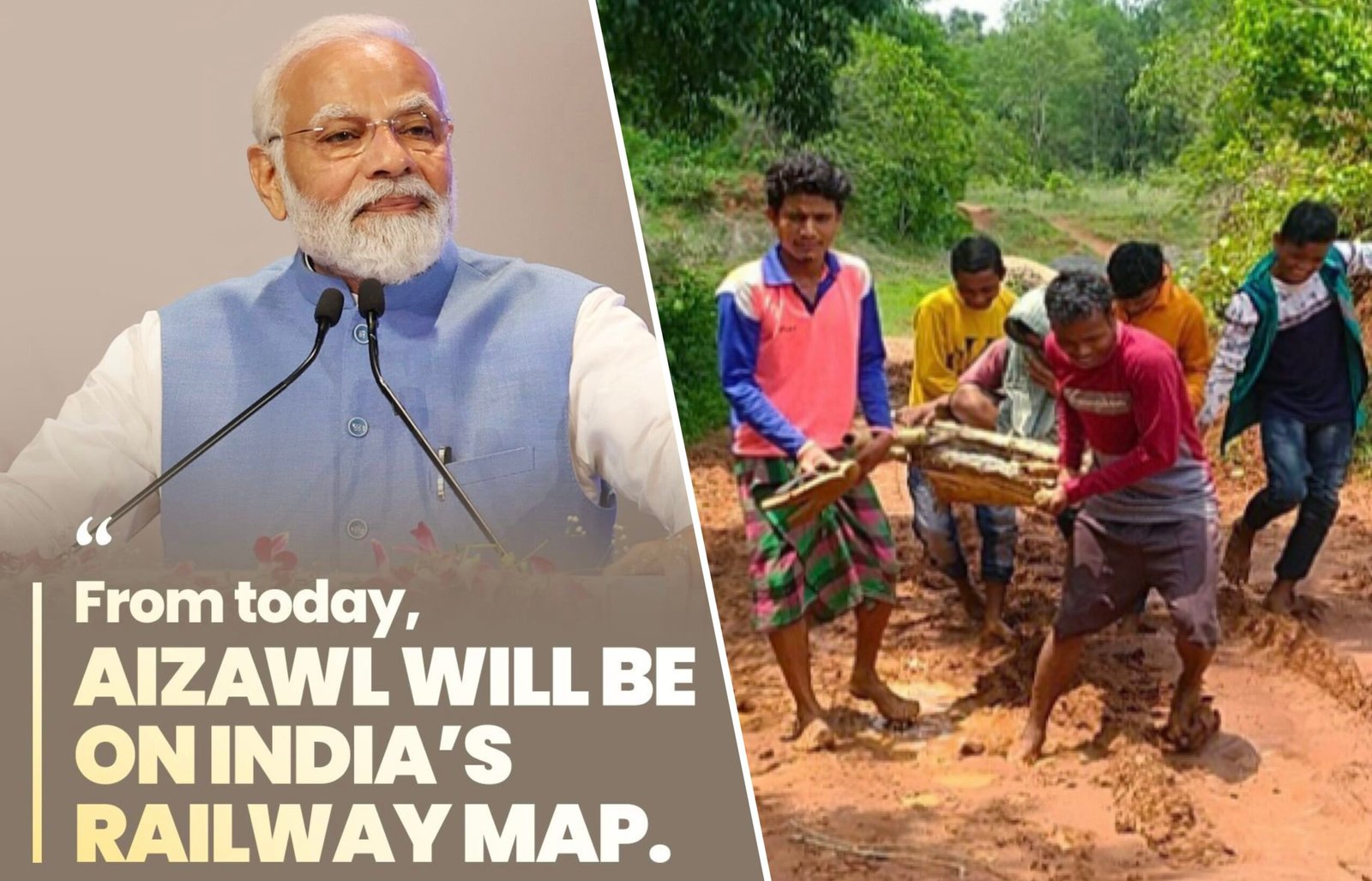
On Saturday, Prime Minister Narendra Modi inaugurated Mizoram’s first railway line, connecting Bairabi to Sairang near Aizawl, and flagged off the state’s maiden Rajdhani Express to Delhi. This marks a historic moment: after over seventy-seven years of Indian Independence, the capital of Mizoram finally joins the national railway grid. While it is cause for celebration, the event also underlines a long history of uneven connectivity, with many Indian districts, towns and regions still awaiting basic railway or even road access.
Connecting the Unconnected: Who’s Left Out?
According to Indian Railways’ own mapping via satellite, 132 district headquarters in India are still not on the rail map. A detailed project report (DPR) is being prepared to bring them into connectivity.
- Dhar, Khargone and Barwani in Madhya Pradesh (tribal districts)
- Wayanad in Kerala
- Madikeri in Kodagu (Karnataka)
- Several state capitals in the Northeast, such as Imphal, Kohima, and Shillong, still await completion of their projects
These unlinked areas tend to share certain features: hilly or difficult terrain, low population density, tribal or forested regions, lower per capita income, weaker healthcare, education and employment indicators. Lack of rail (and often road) connectivity compounds their backwardness; transport cost, market access, movement of goods & people, emergency services all suffer.
History of Railways in India & Post-Independence Trajectory
Colonial Origins up to 1947
The first passenger train in India ran on 16 April 1853 from Bombay (Bori Bunder) to Thane, 34 km. By 1880, about 14,500 km of track had been laid around the three major port cities (Bombay, Madras, Calcutta). By the time of independence in 1947, the network had grown substantially, but many regions (especially in mountains, forests, remote interior) remained disconnected.
Post-Independence: Gains, Gaps, and Rate of Growth
In 1951, Indian Railways was formed by amalgamating dozens of private and chartered rail companies. The network then was roughly 55,000 km. Over the decades, there has been steady expansion: new lines, gauge conversion (Project Unigauge), electrification, doubling, etc. But the rate of adding new route-kilometres slowed over certain periods.
In more recent years (past 10-11 years, under the BJP government led by Narendra Modi), there has been accelerated investment: as of December 2023, 61,508 route km of Broad-Gauge (BG) network had been electrified, about 93.83% of the total BG route. In 2014, the figure was ~21,801 km. In the ten years up to 2024, around 31,000 km of rail track were added; in 2023 alone, around 5,300 km were added.
The Road Backwards: Areas Still Lagging
Even as more state capitals and district HQs get linked, many areas remain disconnected:
- Bijapur district, Chhattisgarh: No station in the district; nearest is Dantewada, 92 km away. Literacy is low (~41.6%).
- Pratapgarh district, Rajasthan: The only district in Rajasthan without rail connection (as per older reports).
- Karnataka: About 80 taluks reportedly still remain without rail connectivity.
Road connectivity, too, remains inadequate, especially in tribal, hilly, and forested areas where infrastructure is seasonal or absent.
The Shift: Rajdhanis, Vande Bharat & Changing Priorities
Prestige trains like Rajdhani and Shatabdi symbolize connectivity between metros and major cities. The extension of the Rajdhani to Aizawl signals the Northeast being brought center-stage. Vande Bharat Express trains (introduced in 2019) represent a new generation of fast, modern trains. However, the focus on speed and prestige often skews resource allocation away from rural or remote lines.
Critical Reflections: What Aizawl Means, and What’s Next
The inauguration of the Aizawl rail line and Rajdhani is a watershed — but many places remain unconnected. For tribal youth, farmers, and businesses, connectivity changes lives. The cost of delay is high in human terms, as regions without rail lag behind in literacy, health, and economic growth. The emphasis on prestige trains must be balanced with last-mile connectivity and quality of service.
Measuring Backwardness: What the Data Suggests
Areas lacking transport connectivity often face lower socio-economic indicators: poor per capita income, weak health and education outcomes, inflated market costs, and delayed disaster relief.
What Has Changed & What Remains
What Has Improved: Rapid electrification (over 99% by August 2025), faster construction, station redevelopment, modern signalling, and improved safety. Greater focus on strategic connectivity in the Northeast and tribal regions.
Remaining Challenges: Slow pace of connecting 132 unlinked district HQs, land issues, cost overruns, environmental hurdles, and limited frequency of trains in connected districts.
Broader Comparison: Congress vs BJP Tenures
Both Congress and BJP governments contributed to expansion, but BJP years have seen larger investments and faster execution. Critics argue that despite progress, many areas remain excluded, and resource allocation often prioritizes speed and prestige over inclusivity.
Closing Remarks
The Bairabi-Sairang line and Rajdhani to Aizawl mark a historic achievement. Yet the long wait highlights India’s uneven infrastructure development. True equity will be achieved not with more prestige trains alone, but by ensuring every district and village has reliable, affordable connectivity — rail, road, and feeder services alike.