
Issue Brief:
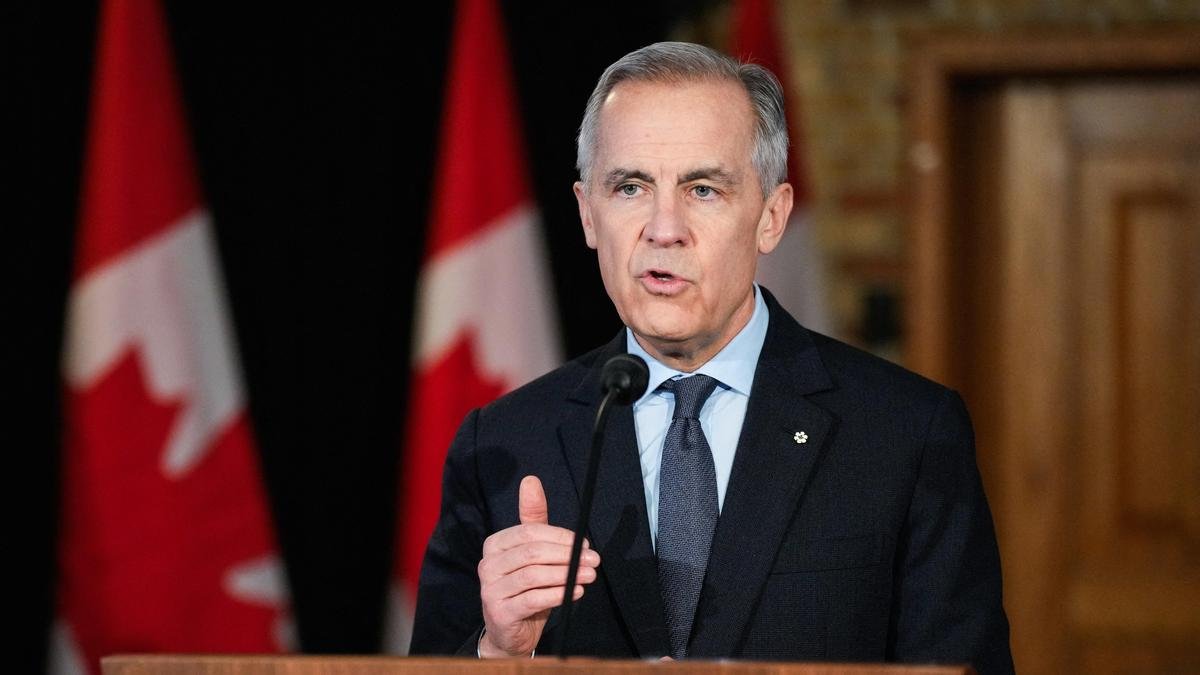
In a significant diplomatic exchange at the 2026 World Economic Forum (WEF) in Davos, Canadian Prime Minister Mark Carney forcefully countered a provocative statement by U.S. President Donald Trump asserting that “Canada lives because of the United States.” Carney emphasised Canada’s sovereignty, resilience, and distinct national identity, underscoring broader tensions in Canada–U.S. relations amid shifting global geopolitical dynamics.
Davos 2026 and U.S.–Canada Diplomatic Strain:
At the annual World Economic Forum gathering of global political and economic elites, Carney delivered a high-profile speech warning of a “rupture” in the post-World War II U.S.-led rules-based international order. He argued that “middle powers” like Canada can no longer rely solely on historical frameworks of alliances and must independently navigate a complex geopolitical landscape.
President Trump, speaking the following day, criticised Carney’s remarks, claiming Canada “lives because of the United States” and suggesting that Canada should be more “grateful” for U.S. protection and support. Trump’s comments were framed in the broader context of his assertive foreign policy posture, which has included tariffs on Canadian goods, repeated rhetorical pressure, and controversial statements about North American territorial dynamics.
Carney’s Response: Assertion of Canadian Sovereignty:
Upon returning to Canada, Carney responded directly to Trump’s remarks in a national address in Quebec City. He firmly rejected the notion that Canada’s existence or prosperity is contingent on the United States, stating:
“Canada doesn’t live because of the United States. Canada thrives because we are Canadian.”
Carney acknowledged the long-standing partnership between the two nations, particularly in economic cooperation, security collaboration, and cultural exchange, but emphasised that Canadians are “masters in our home” and that Canada’s future is determined by its people and values, not by external dependency.
He presented Canada as a potential model for democratic resilience in a world marked by rising authoritarianism and global uncertainty, reinforcing themes from his Davos speech about the need for principled multilateralism and collective action among middle powers.
Broader Reactions and Implications
Diplomatic and Domestic Repercussions:
The exchange has drawn reactions both within Canada and internationally. In Canada, Carney’s assertive rebuttal has bolstered national support for his leadership, with commentators highlighting his confidence in defending Canadian autonomy. Trump’s rhetoric and behaviour, including controversial images and public statements about territorial expansion and U.S. dominance, have intensified concerns in allied capitals about U.S. foreign policy unpredictability. Trump reportedly withdrew Canada’s invitation to his newly announced “Board of Peace,” an initiative tied to broader U.S. diplomatic efforts, after the dispute.
Strategic Implications:
This diplomatic episode underscores emerging tensions in North American relations:
Canadian Sovereignty Narrative: Carney’s strong defence of Canadian independence aligns with growing domestic and international discourse on the role of middle powers in a multipolar world.
U.S. Global Posture and Alliances: Trump’s assertive remarks at Davos reflect a broader U.S. realignment toward bilateral leverage over multilateral cooperation, raising questions about the future of traditional alliances.
Economic Interdependence: Despite political tensions, economic interdependence remains significant; over three-quarters of Canadian exports are destined for the U.S., meaning diplomatic frictions could have material consequences if they influence trade policy.
Conclusion:
The exchange between Carney and Trump at Davos 2026 highlights a pivotal moment in Canada–U.S. relations. Carney’s rebuttal not only defends Canadian sovereignty and national identity but also reflects broader concerns about the evolving international order and the role of major and middle powers within it. As global power configurations shift and the rules-based system encounters stress, this incident signals a deeper recalibration of diplomatic norms and alliances in the 21st century.
About the Author
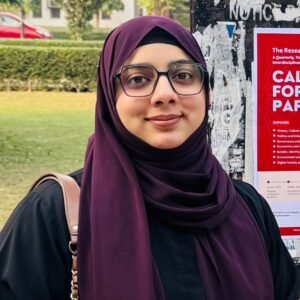
Wasia Khan is a PhD Scholar of International Relations and Area Studies at MMAJ Academy of International Studies, Jamia Millia Islamia, New Delhi. A graduate in Turkish Language and Literature, she also holds a Master’s in International Relations from the MMAJ Academy of International Studies of the same university. She is Deputy Executive Director of CDFA Research Foundation, and currently serves as the Director of the Division of Strategic & International Affairs.
Disclaimer: The opinions expressed in this article are solely those of the authors and do not necessarily reflect the views of CDFA or any affiliated organisation.