


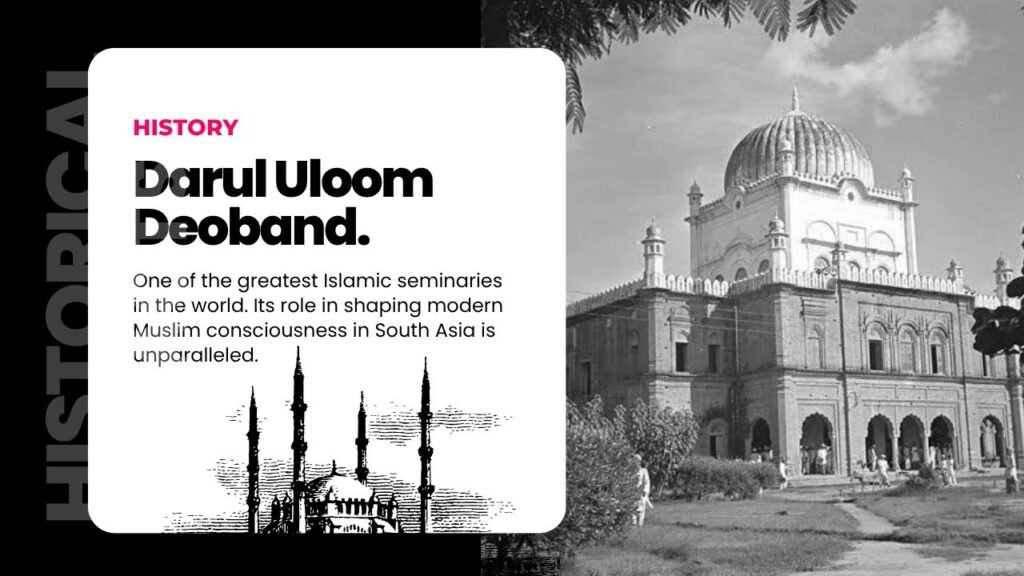


Abstract: This essay examines the pivotal role of early Deobandi scholars in forging modern Muslim identity in colonial South Asia through an analysis of the intellectual genealogy from Shah Waliullah Dehlawi (1703-1762) to the founding generation of Darul Uloom Deoband (established 1866) and their successors through 1947. Drawing upon extensive primary sources and contemporary scholarship, this research traces how figures including Maulana Muhammad Qasim Nanautavi, Maulana Rashid Ahmad Gangohi, Maulana Mahmud Hasan (Shaykh al-Hind), Maulana Ashraf Ali Thanwi, and Maulana Hussain Ahmad Madani created a distinctive synthesis of Islamic scholarship, anti-colonial resistance, and educational reform that fundamentally transformed Muslim consciousness in the subcontinent.
Through innovative pedagogical approaches, including Urdu medium instruction, popular financing models, and curriculum reforms integrating traditional Islamic sciences with contemporary needs, Darul Uloom Deoband democratised religious education and created a new class of Muslim intellectuals capable of navigating multiple identities as believers, patriots, and modern citizens.
By analysing the scholarly contributions, institutional innovations, and political engagement of these early Deobandi leaders, this essay contributes to broader understanding of how religious educational institutions can serve as catalysts for both cultural preservation and social transformation. The study argues that the Deobandi synthesis of faith and scholarship, tradition and modernity, Islamic identity and national belonging offers enduring insights for contemporary discussions about religion’s role in pluralistic societies and the possibility of authentic modernization rooted in indigenous intellectual traditions.
Keywords: Darul Uloom Deoband, Islamic education, colonial India, Muslim consciousness, anti-colonial resistance, composite nationalism, Shah Waliullah, Deobandi movement, religious reform, South Asian Islam
The recent visit of Afghanistan’s Foreign Minister Amir Khan Muttaqi to Darul Uloom Deoband in October 2025 has illuminated once again the enduring influence and global reach of one of the most significant Islamic educational institutions of the modern era. Muttaqi’s pilgrimage to this historic seminary, where he was welcomed by thousands of students and scholars, underscores the profound intellectual and spiritual legacy that began with the establishment of Darul Uloom Deoband in 1866 and continues to shape Muslim consciousness across continents. This momentous visit serves as a contemporary reminder of how the early scholars of Deoband not only preserved Islamic learning during the tumultuous period of British colonial rule but fundamentally transformed the intellectual landscape of South Asian Islam, creating a modern Muslim consciousness that would influence millions from the Indian subcontinent to Afghanistan and beyond.
The Intellectual Precedent: Shah Waliullah and the Foundations of Islamic Revival (1703-1762)
The story of Darul Uloom Deoband begins not in 1866, but in the intellectual ferment of 18th-century Delhi, where Shah Waliullah Dehlawi (1703-1762) laid the foundational framework that would inspire the Deobandi movement. As the greatest Muslim scholar of his era, Shah Waliullah emerged during the decline of the Mughal Empire, witnessing the fragmentation of Muslim political authority and the erosion of Islamic intellectual traditions. His revolutionary approach to Islamic scholarship centered on making religious knowledge accessible to the masses, most notably through his Persian translation of the Quran, the first complete translation by an Indian Muslim scholar.
The political dimension of Shah Waliullah’s thought proved equally influential on the Deobandi scholars. His correspondence with political leaders, including his famous letter to Ahmad Shah Durrani urging intervention in India to restore Muslim political authority, demonstrated his conviction that Islamic scholarship must engage with the temporal world. His conception of an ideal state where rulers served as custodians of the people’s trust, with economic policies shaped by the needs of the poor rather than elite luxury, provided a framework for later Deobandi political thought. The intellectual genealogy from Shah Waliullah to the Deobandi founders was direct and unmistakable—his teachings on educational reform, spiritual synthesis, and political engagement would find their fullest expression in the institution established nearly a century later.
The Genesis of Deobandi Educational Reform: Founding Vision and Institutional Innovation (1866-1880)
When Maulana Muhammad Qasim Nanautavi (1832-1880) and his associates established Darul Uloom Deoband on May 31, 1866, they were responding to a civilizational crisis that demanded both preservation and transformation. Born in 1832 in Nanauta, near Saharanpur, Nanautavi came of age during the traumatic aftermath of the 1857 revolt, when Muslims faced systematic persecution and cultural disruption under intensified British colonial rule. His education under Mamluk Ali Nanautavi at Delhi College exposed him to both traditional Islamic sciences and the rational disciplines, creating the intellectual synthesis that would characterize Deobandi scholarship.

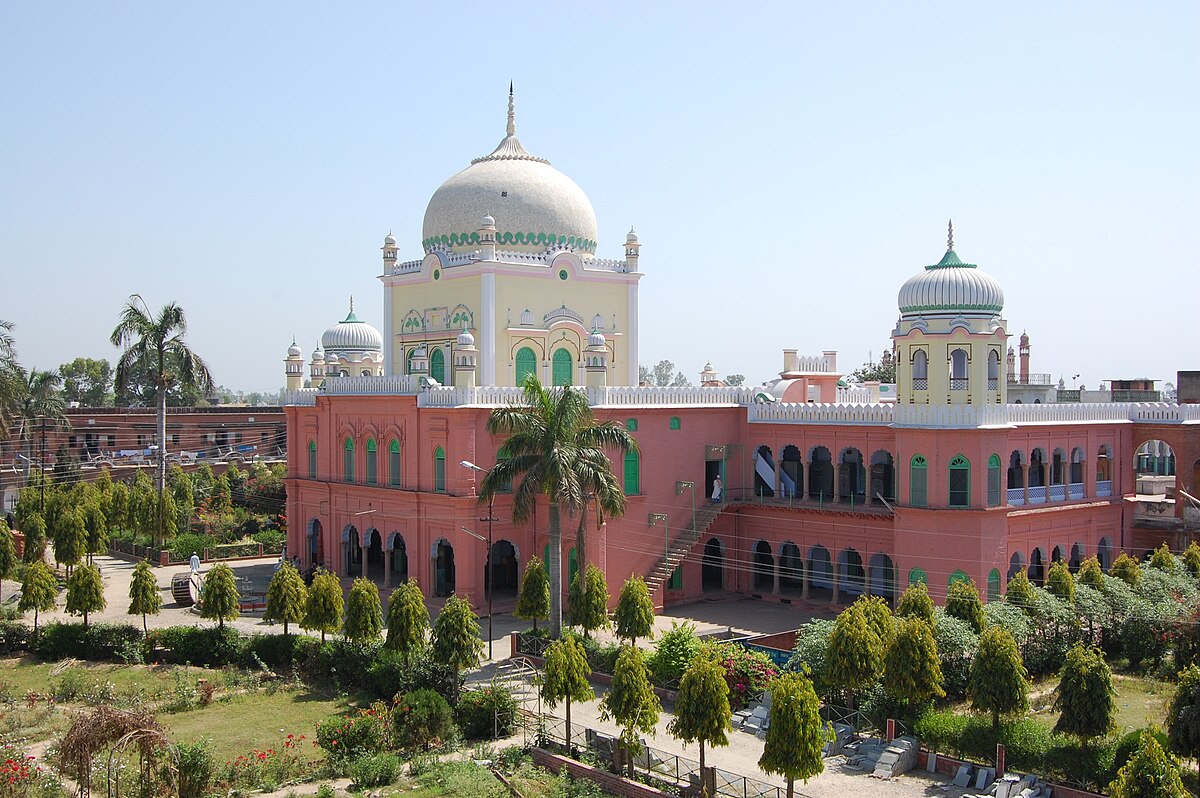
Nanautavi’s vision for Darul Uloom transcended the establishment of merely another madrasa—he conceived of it as a fortress of Islamic civilization that could preserve essential religious knowledge while adapting to modern challenges. His educational philosophy combined rigorous study of Islamic holy scriptures with rational subjects including logic, philosophy, and science, while maintaining a strong Sufi orientation affiliated with the Chishti order. The curriculum he developed, based on the Dars-e-Nizami system but enhanced with Shah Waliullah’s innovations, aimed to produce scholars who were both spiritually grounded and intellectually equipped to navigate the complexities of colonial modernity.
The revolutionary aspect of Nanautavi’s approach lay in its democratic accessibility. Unlike traditional madrasas that relied on royal or elite patronage, Darul Uloom operated entirely through popular donations, creating what became known as the “public donation system”. This financing model was both practically necessary and symbolically powerful—it connected the institution to the masses and prevented elite capture, while simultaneously expressing resistance to British authority and its collaborators. The fact that even the poorest Muslims could contribute to the institution fostered a sense of collective ownership that strengthened Muslim communal identity during a period of political powerlessness.
Co-Founders and Early Leadership: Institutional Consolidation and Scholarly Authority (1866-1905)
Maulana Rashid Ahmad Gangohi (1826-1905), though often mentioned as co-founder, played a more complex role in Deoband’s development that exemplifies the scholarly networks underlying the movement. Born in Gangoh, he studied under many of the same teachers as Nanautavi, including Mamluk Ali Nanautavi and Shah Abdul Ghani Mujaddidi. His spiritual formation under Haji Imdadullah in the Sufi path provided the mystical dimension that balanced Deoband’s scholarly rigor. While historical evidence suggests he did not directly participate in the seminary’s establishment, his formal relationship with the institution began in 1285 AH with his written inspection of the madrasa, and he became its second patron after Nanautavi’s death.
Gangohi’s scholarly contributions centered on Hadith studies and jurisprudence, with his Fatawa-e-Rashidiya becoming a foundational text for Deobandi legal thought. His approach to Islamic law emphasized strict adherence to Sharia while allowing for contextual interpretation, a methodology that enabled Deobandi scholars to address contemporary challenges without compromising fundamental principles. His lectures on Sahih al-Bukhari and Jami at-Tirmidhi, recorded by Muhammad Yahya Kandhlawi and later compiled by Zakariyya Kandhlawi, became standard texts in Deobandi seminaries worldwide. Through his students and writings, Gangohi ensured that Deobandi scholarship maintained its connection to classical Islamic learning while developing distinctive responses to colonial challenges.
The institutional transformation of Darul Uloom reached its mature form under Maulana Muhammad Yaqub Nanautavi (1833-1884), the son of Mamluk Ali Nanautavi and the seminary’s first principal. Appointed in 1866 after serving as a teacher in government colleges, Yaqub brought both traditional Islamic scholarship and administrative experience to the position. His tenure from 1866 to 1883 witnessed the seminary’s expansion from a modest beginning under a pomegranate tree in Chhatta Masjid to a full-fledged institution with its own campus, established in 1875.
Yaqub’s educational vision emphasized the training of competent Islamic scholars who could serve their communities as teachers, jurists, and spiritual guides. His students included most of the second-generation Deobandi scholars: Mahmud Hasan Deobandi, Aziz-ur-Rahman Usmani, Khalil Ahmad Saharanpuri, and Ashraf Ali Thanwi. This cohort would carry forward the Deobandi mission across the Indian subcontinent and beyond, establishing affiliated seminaries and spreading the movement’s distinctive approach to Islamic education. Yaqub’s biographical work on Qasim Nanautavi, Sawaneh Umri Hazrat Maulana Qasim Nanutawi, preserved the intellectual legacy of the founder for future generations.
From Scholarship to Resistance: Mahmud Hasan and the Political Awakening of Deoband (1890-1920)
The political awakening of Deoband reached its zenith under Maulana Mahmud Hasan Deobandi (1851-1920), known as Shaykh al-Hind, who embodied the institution’s evolution from educational reform to active anti-colonial resistance. As Deoband’s first student and later its principal from 1890, Mahmud Hasan represented the culmination of the founders’ educational vision while pioneering its transformation into organized political opposition. His evolution from scholar to revolutionary activist reflected the broader trajectory of Deobandi engagement with the political realities of colonial rule and demonstrated how Islamic education could generate systematic resistance to imperial domination.

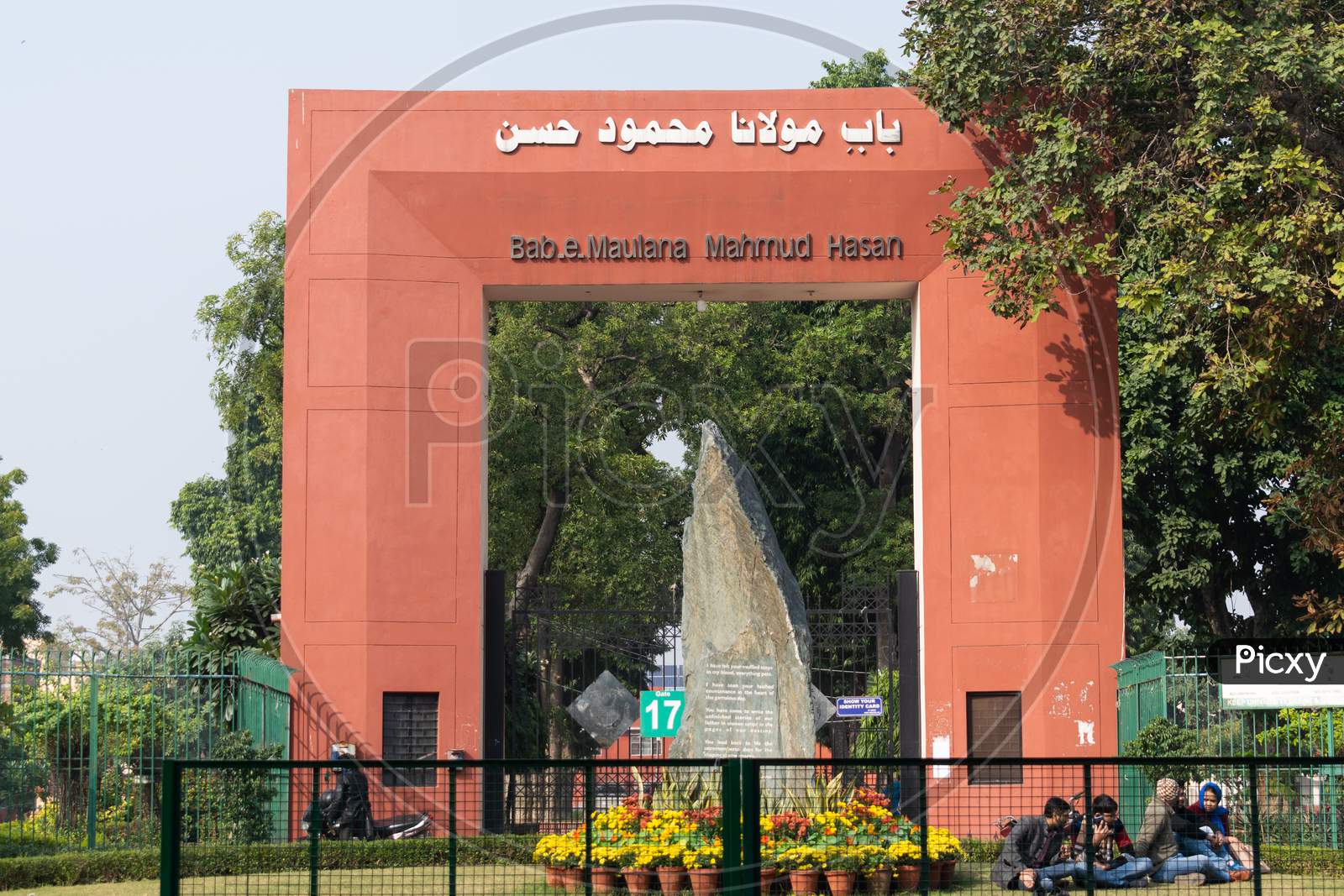
Mahmud Hasan’s political consciousness was shaped by his understanding of the global crisis facing the Muslim ummah, particularly the decline of the Ottoman Empire during World War I. His organization of the Silk Letter Movement (Reshmi Rumal Tehrik) represented the most ambitious attempt by Indian Muslims to coordinate international resistance against British imperialism. The plan sought to establish an armed revolution against British rule with support from Ottoman Turkey, Germany, Russia, and Afghanistan, with regional commands in Istanbul, Tehran, and Kabul. Though the conspiracy was discovered and resulted in his imprisonment in Malta from 1916 to 1920, the movement demonstrated Deobandi commitment to practical resistance against colonial oppression.
The historical significance of the Silk Letter Movement extends beyond its immediate political failure to encompass its role in transforming Deobandi educational philosophy toward active engagement with contemporary politics. Mahmud Hasan’s network of students and associates, including Ubaidullah Sindhi, Hussain Ahmad Madani, and Aziz-ur-Rahman Usmani, carried forward both the revolutionary methodology and the educational mission of their teacher. The movement’s international scope, involving coordination with German military advisors, Ottoman officials, and Afghan rulers, demonstrated the global consciousness that Deobandi education fostered among its graduates.
The failure of armed resistance led to a fundamental transformation in Deobandi political strategy after 1920. Mahmud Hasan’s experience in prison, where he memorized the entire Quran to ensure his teacher could hear it during Ramadan prayers, symbolized the synthesis of scholarly dedication and political commitment that characterized later Deobandi leaders. Upon his release, he was honored with the title “Shaykh al-Hind” by the Central Khilafat Committee and became a founding figure of Jamia Millia Islamia, representing the movement’s shift toward educational and constitutional methods of resistance. His influence on students like Ashraf Ali Thanwi, Anwar Shah Kashmiri, Hussain Ahmad Madani, and Ubaidullah Sindhi ensured the continuity of Deobandi political engagement through multiple generations.
Spiritual Synthesis and Popular Education: Ashraf Ali Thanwi and the Democratisation of Islamic Knowledge (1863-1943)
The spiritual dimension of Deobandi scholarship reached its most sophisticated expression in the work of Maulana Ashraf Ali Thanwi (1863-1943), known as Hakimul Ummat (The Wise Man of the Community), whose contributions exemplified the movement’s success in creating accessible Islamic scholarship for mass consumption. Born in Thana Bhawan, Thanwi represented the synthesis of rigorous Islamic scholarship with profound mystical insight that distinguished Deobandi spirituality from both rigid orthodoxy and popular folk practices. His education at Darul Uloom Deoband under teachers including Muhammad Yaqub and Mahmud Hasan provided him with the scholarly foundation, while his spiritual initiation under Haji Imdadullah Muhajir Makki connected him to the Chishti Sufi tradition.
Thanwi’s literary output exceeded one thousand works, including his monumental Quranic commentary Bayan Ul Quran and the influential Bahishti Zewar (Heavenly Ornaments), which provided practical guidance for Muslim daily life. These works represented a revolutionary departure from traditional Islamic scholarship by addressing the religious and practical needs of ordinary Muslims, particularly women, in accessible Urdu prose rather than classical Arabic. His approach to Islamic reform emphasized the purification of the soul (nafs) and individual spiritual development, addressing the practical challenges faced by Muslims living under colonial rule. Unlike reformers who engaged in public theological debates, Thanwi focused on personal transformation and community guidance, creating a model of Islamic leadership that balanced scholarly authority with spiritual accessibility.
The historical impact of Thanwi’s educational methodology extended far beyond his immediate circle of disciples to influence the broader development of Urdu Islamic literature and popular religious education. His use of Urdu as the primary medium for Islamic instruction helped standardize and spread the language throughout Muslim communities across South Asia, contributing significantly to the formation of a pan-Indian Muslim cultural identity. The widespread circulation of his works, particularly Bahishti Zewar, created a common vocabulary of Islamic practice that transcended regional and linguistic boundaries, fostering a sense of shared religious identity among diverse Muslim populations.
The political dimensions of Thanwi’s thought reflected the complex negotiations required of Muslim intellectuals during the independence struggle. His support for the Muslim League and correspondence with Muhammad Ali Jinnah represented a departure from the Congress-aligned position of many Deobandi scholars, including his own alma mater. His disciples Zafar Ahmad Usmani and Shabbir Ahmad Usmani played crucial roles in providing religious legitimacy for the Pakistan movement, while Thanwi himself resigned from Darul Uloom Deoband’s management committee due to its pro-Congress stance. This ideological diversity within the Deobandi movement demonstrated its capacity to produce independent thinkers who could assess political realities according to their own understanding of Islamic principles rather than institutional orthodoxy.
Composite Nationalism and Anti-Colonial Politics: Hussain Ahmad Madani and the Vision of United India (1879-1957)
The nationalist trajectory of Deobandi political thought found its most articulate expression in Maulana Hussain Ahmad Madani (1879-1957), whose advocacy for composite nationalism represented a sophisticated attempt to reconcile Islamic identity with Indian territorial belonging. Born in Bangarmau, Unnao district, Madani’s early education from his father Sayyid Habibullah prepared him for admission to Deoband in 1892, where he studied under luminaries including Shaykh al-Hind Mahmud Hasan, Ubaidullah Sindhi, and Rashid Ahmad Gangohi. His voluntary imprisonment in Malta alongside his teacher Mahmud Hasan, where he memorized the Quran to enable Tarawih prayers, exemplified the depth of commitment that characterized Deobandi scholar-activists.
Madani’s intellectual contribution to Indian Muslim political thought centered on his theory of composite nationalism articulated in Muttahida Qaumiyat Aur Islam (United Nationalism and Islam), published in 1938. His argument that Muslims were the original inhabitants of India, based on Islamic beliefs about human origins from Adam, provided a theological foundation for Muslim belonging to Indian soil that challenged exclusivist narratives of religious nationalism. This position directly challenged the two-nation theory advanced by Muhammad Iqbal and the Muslim League, leading to heated intellectual exchanges that defined the parameters of Muslim political identity in the crucial decades before independence.
The practical implications of Madani’s composite nationalism were evident in his leadership of Jamiat Ulema-e-Hind, established in 1919 as the political wing of the Deobandi movement. Under his guidance, JUH consistently supported the Indian National Congress and opposed the partition of India, viewing united resistance against British colonialism as both strategically necessary and religiously mandated. His declaration of independence as the goal of Muslim political action in 1917, preceding the Congress’s formal adoption of this position, demonstrated Deobandi commitment to Indian freedom rather than separate Muslim statehood. The transformation from the violent resistance of the Silk Letter Movement to the constitutional politics of JUH reflected the movement’s pragmatic adaptation to changing circumstances while maintaining its fundamental opposition to colonial rule.


The historical significance of Madani’s position extended beyond immediate political calculations to encompass a comprehensive vision of post-colonial Indian society that could accommodate religious diversity within a unified national framework. His concept of watan (homeland) as a legitimate focus of Muslim loyalty, provided it did not conflict with religious obligations, offered a theoretical foundation for Muslim participation in secular democratic institutions. This perspective provided intellectual resources for post-independence efforts to build a pluralistic democracy that acknowledged religious distinctiveness while maintaining common citizenship, even as the ultimate failure of his political vision in 1947 demonstrated the limitations of scholarly influence in mass political movements.
Fikri Inqilab and Institutional Legacy: The Transformation of Islamic Learning in South Asia
The educational revolution initiated by Darul Uloom Deoband extended far beyond the confines of religious instruction, fundamentally transforming the landscape of Muslim learning in South Asia and establishing patterns that would influence global Islamic education. The seminary’s adoption of Urdu as the medium of instruction, replacing the traditional Arabic and Persian, democratized Islamic knowledge by making it accessible to students from diverse linguistic and social backgrounds. This innovation not only brought religious learning to the masses but also contributed significantly to the spread and standardization of Urdu as a pan-Indian Muslim lingua franca, extending its reach far beyond the traditional centers of Delhi and Lucknow.
The Deobandi curriculum represented a careful balance between traditional Islamic sciences and contemporary needs that reflected the movement’s commitment to preserving authentic scholarship while engaging with modern challenges. While maintaining rigorous study of the Quran, Hadith, Islamic law, logic, and philosophy, the syllabus incorporated elements designed to address the challenges of colonial modernity. The emphasis on Hadith studies, following Shah Waliullah’s methodology, ensured that Deobandi scholars possessed direct access to Prophetic teachings rather than relying solely on later commentaries. This approach produced graduates who could engage with contemporary issues while maintaining authentic connection to Islamic sources, creating a distinctive form of scholarly authority that combined traditional learning with practical relevance.
The institutional model developed at Deoband proved remarkably adaptable and influential across diverse geographical and cultural contexts. Within decades of its establishment, hundreds of affiliated seminaries across India, Pakistan, Bangladesh, and Afghanistan had adopted the Deobandi curriculum and methodology. The movement’s expansion to the United Kingdom, South Africa, and other regions of Muslim settlement demonstrated its global appeal and relevance. Each affiliated institution maintained the core educational principles while adapting to local contexts, creating a network of schools that shared fundamental approaches while responding to diverse community needs.
The intellectual output of Deobandi scholars encompassed thousands of works addressing every aspect of Islamic knowledge and practice, creating a comprehensive literature that bridged scholarly discourse and popular education. The publication of short texts (risalas) for mass distribution represented an innovative approach to religious education, making complex theological and legal concepts accessible to ordinary Muslims. These publications addressed practical questions of daily life, ritual practice, and spiritual development, creating a literature that connected scholarly learning with popular needs while maintaining doctrinal consistency. The movement’s emphasis on fatwa writing as a means of providing moral guidance reflected its commitment to making Islamic scholarship relevant to contemporary challenges faced by Muslim communities under colonial rule.
Anti-Colonial Consciousness and Nation-Building: The Political Legacy of Deobandi Education
The political consciousness fostered by Deobandi education manifested in multiple forms of anti-colonial resistance and nation-building activity that demonstrated the practical implications of Islamic scholarship for contemporary politics. From the revolutionary activism of the Silk Letter Movement to the constitutional politics of Jamiat Ulema-e-Hind, Deobandi graduates consistently opposed British rule while articulating visions of post-colonial Muslim identity that balanced religious commitment with national belonging. Their participation in the Khilafat Movement, the Non-Cooperation Movement, and the broader independence struggle demonstrated the practical implications of their educational formation in producing politically engaged religious leaders.

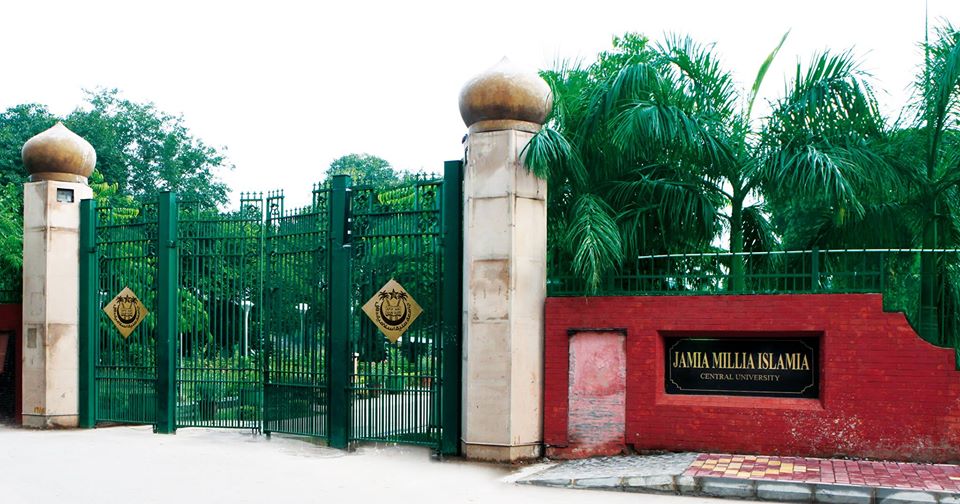
The establishment of Jamia Millia Islamia as an alternative to British-controlled universities represented the Deobandi commitment to educational independence as a foundation for political freedom. Founded in 1920 with support from Mahmud Hasan and other Deobandi leaders, the institution embodied the movement’s vision of indigenous education that could produce competent professionals while maintaining Islamic identity. The university’s emphasis on Urdu medium instruction and its integration of religious and secular subjects reflected Deobandi educational philosophy adapted to the needs of modern professional training.
The synthesis of spiritual and political consciousness achieved by Deobandi scholars created a distinctive model of religious leadership that balanced otherworldly concerns with temporal engagement. Unlike purely political activists or purely spiritual guides, Deobandi leaders integrated rigorous Islamic scholarship with practical involvement in community affairs and national politics. This integration enabled them to provide religious legitimacy for political positions while maintaining scholarly credibility, creating a form of authority that proved influential across South Asian Muslim communities. The diversity of political positions taken by different Deobandi scholars: from Madani’s composite nationalism to Thanwi’s support for Pakistan—demonstrated the movement’s capacity to produce independent political thinkers rather than institutional conformity.
Modernity and Tradition: The Deobandi Synthesis in Historical Context
The Deobandi approach to modernity rejected both uncritical acceptance of Western values and rigid traditionalism, instead developing what might be termed “authentic modernization” that preserved essential Islamic principles while engaging with contemporary knowledge and institutions. This perspective acknowledged the need for Muslims to engage with contemporary knowledge and technology while preserving essential Islamic principles and practices. The movement’s openness to non-Muslim students in its early years, its adoption of modern administrative methods, and its engagement with contemporary political and social issues demonstrated a pragmatic approach to change. At the same time, its emphasis on Islamic law, traditional scholarship, and spiritual development ensured continuity with classical Islamic civilization.
The creation of modern Muslim consciousness through Deobandi education involved the formation of individuals who could navigate multiple identities simultaneously, as Muslims, as Indians or Pakistanis, as inheritors of Islamic civilization, and as participants in contemporary society. This complex identity formation required sophisticated intellectual tools that enabled graduates to engage with diverse communities while maintaining their distinctive religious commitments. The success of this educational project is evident in the influence wielded by Deobandi graduates in fields ranging from religious scholarship to political leadership to social reform across multiple generations and geographical contexts.
The impact of Darul Uloom Deoband on the development of modern India extended far beyond the Muslim community, influencing broader patterns of educational reform, political mobilization, and cultural synthesis. The seminary’s model of popular financing through mass donations inspired similar approaches in other communities and institutions, demonstrating alternatives to elite or state control of education. Its emphasis on mother-tongue instruction influenced linguistic policies across Indian educational institutions, while its integration of traditional and modern knowledge provided a template for other efforts to preserve cultural identity while engaging with global modernity.
Contemporary Relevance and Historical Assessment: The Enduring Legacy of Deobandi Scholarship
The global influence of Deobandi education became increasingly evident in the post-independence period, as the network of affiliated seminaries expanded across continents and adapted to diverse local conditions. The Taliban’s emergence from Deobandi influenced seminaries in Pakistan, while representing a particular interpretation of the tradition, demonstrates its continued political relevance in contemporary Islamic movements. The recent visit of Taliban Foreign Minister Muttaqi to Darul Uloom Deoband symbolizes this enduring connection, even as it raises questions about the diverse trajectories taken by institutions claiming Deobandi heritage. The contrast between the inclusive nationalism advocated by Madani and the exclusivist politics associated with some contemporary Deobandi-influenced movements illustrates the ongoing tensions within the tradition.
Contemporary assessments of the Deobandi legacy must acknowledge both its remarkable achievements in preserving Islamic learning during unprecedented disruption and its internal tensions regarding political engagement and cultural adaptation. The movement’s success in preserving Islamic learning during a period of unprecedented disruption demonstrates the effectiveness of its educational methodology and institutional design. Its contribution to anti-colonial resistance and Indian nationalism reveals the political sophistication of its leadership and the practical relevance of its scholarly training. The global reach of its educational network testifies to the universal appeal of its synthesis of traditional learning and modern engagement.
The intellectual genealogy traced from Shah Waliullah through the founders and early generations of Deobandi scholars reveals a consistent commitment to making Islamic scholarship relevant to contemporary challenges while preserving essential spiritual and ethical principles. This balance between preservation and adaptation enabled the movement to survive colonial persecution, navigate independence and partition, and maintain influence in the dramatically changed circumstances of the modern world. The thousands of graduates produced by Deobandi institutions over more than 150 years have carried this synthesis into diverse fields of activity, from village mosques to international diplomacy, creating a living tradition that continues to evolve while maintaining its foundational commitments.
The enduring significance of Darul Uloom Deoband and its early scholars lies not in any single achievement but in their comprehensive vision of Islamic education as a means of cultural preservation, spiritual development, and social transformation. Their success in creating institutions that could adapt to changing circumstances while maintaining essential principles provides a model for contemporary efforts to reconcile religious identity with modern citizenship. The modern Muslim consciousness they fostered, scholarly yet practical, traditional yet adaptable, locally rooted yet globally connected—continues to influence millions of Muslims who trace their intellectual ancestry to the scholars who established Islamic learning under the pomegranate tree in Deoband in 1866.
As Afghanistan’s Foreign Minister stood among the thousands who welcomed him at Darul Uloom Deoband, he participated in a tradition of scholarship and service that has shaped the modern world in ways that its founders could scarcely have imagined. The continuing relevance of their educational vision, evident in institutions from Karachi to Cape Town, from London to Jakarta, testifies to the enduring power of their synthesis of Islamic learning with contemporary engagement. The early scholars of Deoband created more than an educational institution, they forged a model of religious leadership and intellectual inquiry that continues to provide resources for Muslims seeking to navigate the challenges of the twenty-first century while remaining faithful to their spiritual heritage.
Conclusion
The early scholars of Deoband (May Allah light their graves)achieved something extraordinary: they created a form of Muslim identity that was both authentically Islamic and genuinely modern, both deeply spiritual and actively engaged, both locally rooted and globally relevant. In doing so, they contributed not just to Islamic civilization but to human civilization itself, proving that religious faith, far from being an obstacle to progress, can be its greatest catalyst when properly understood and applied. Their legacy reminds us that the highest calling of scholarship is not merely to preserve the past or adapt to the present, but to plant trees whose shade will comfort future generations, whose fruit will nourish coming centuries, and whose roots will remain forever intertwined with the eternal quest for truth, justice, and divine grace.
In the end, the story of Darul Uloom Deoband and its early scholars is a story of hope, hope that knowledge and faith can walk hand in hand, that tradition and progress can dance together, that Islam and nation can sing in harmony, and that the human spirit, when illuminated by divine guidance and animated by sincere purpose, can overcome any obstacle, bridge any divide, and create beauty from chaos, meaning from confusion, and light from darkness. As long as there are seekers of truth, defenders of justice, and servants of humanity, the legacy of these guardians of faith will continue to inspire, guide, and illuminate the path toward a world where diversity is celebrated, knowledge is cherished, and the divine spark in every human being is recognized and honored.